

It is one of the most common money questions in the trades. A homeowner sees HST on the whole invoice and asks why they are paying tax on drywall the contractor already paid tax on at the supply store. Or a new contractor wonders whether to bill materials "at cost, no tax" to keep the price down. One sole proprietor on r/PersonalFinanceCanada, sitting on about $10,000 in materials, tools and fuel, asked how to handle it "without doubling down on taxes." It confuses contractors and customers alike.
The short answer: if you are registered for GST/HST, you generally charge it on the full price of your taxable work, and that includes the materials you supply and install. The tax you paid at the supplier is not lost; you recover it as an input tax credit. This guide walks through how that works, where the exceptions are, and what your invoice needs to show. It is general information, not tax advice; for a specific situation, talk to your accountant or the Canada Revenue Agency (CRA).
First Question: Are You Registered?
Everything starts with registration. Under the CRA's rules, you are a small supplier while your worldwide taxable revenues stay at or below $30,000 in a single calendar quarter and over the last four consecutive calendar quarters. A small supplier does not have to register, and an unregistered contractor does not charge GST/HST at all, on labour or on materials.
Once you go over that threshold, you have to register and start charging tax. The CRA explains that if you exceed $30,000 in a single quarter, you must charge GST/HST starting with the supply that put you over. You can also register voluntarily before you hit the threshold, which many contractors do so they can claim input tax credits and look established to commercial clients.
Why Materials Get Taxed Again (and Why It Is Not Double Tax)
When you renovate a kitchen, you are not selling the customer a pile of cabinets plus a separate bucket of labour. You are making one supply: a finished, installed kitchen. Your price for that supply includes materials, labour, overhead and profit, and GST/HST applies to the whole amount you charge.
The tax you paid on those cabinets at the supplier is a business input. As a registrant, you claim it back on your return as an input tax credit (ITC), to the extent you used the purchase in your commercial activities. So the supplier's HST flows through you rather than stacking on top of the customer's bill:
- You buy materials and pay HST to the supplier.
- You charge HST on your full invoice to the customer, materials included.
- You remit the HST you collected, minus the ITCs for the HST you paid.
The end customer bears the tax once, on the final price. That is the explanation to give a homeowner who asks why tax is on the drywall line.
"Billing materials 'at cost, no tax' does not make them tax-free. It just means you are paying the tax out of your own margin, and the invoice is still wrong."
Contruva
What Rate Do You Charge?
The rate depends on the province where the supply is made. According to the CRA's GST/HST rates table, the HST is 13% in Ontario, 14% in Nova Scotia (since April 1, 2025), and 15% in New Brunswick, Newfoundland and Labrador, and Prince Edward Island. Other provinces and the territories charge the 5% GST, and British Columbia, Manitoba, Saskatchewan and Quebec also have their own provincial sales tax, which follows provincial rules.
For most renovation and repair work, the supply is made where the property is, so a job on a house in Ontario generally carries 13% HST. If you work across provincial lines, confirm the place-of-supply rules with your accountant before you quote.
Markup, Allowances and "Pass-Through" Costs
Markup on materials
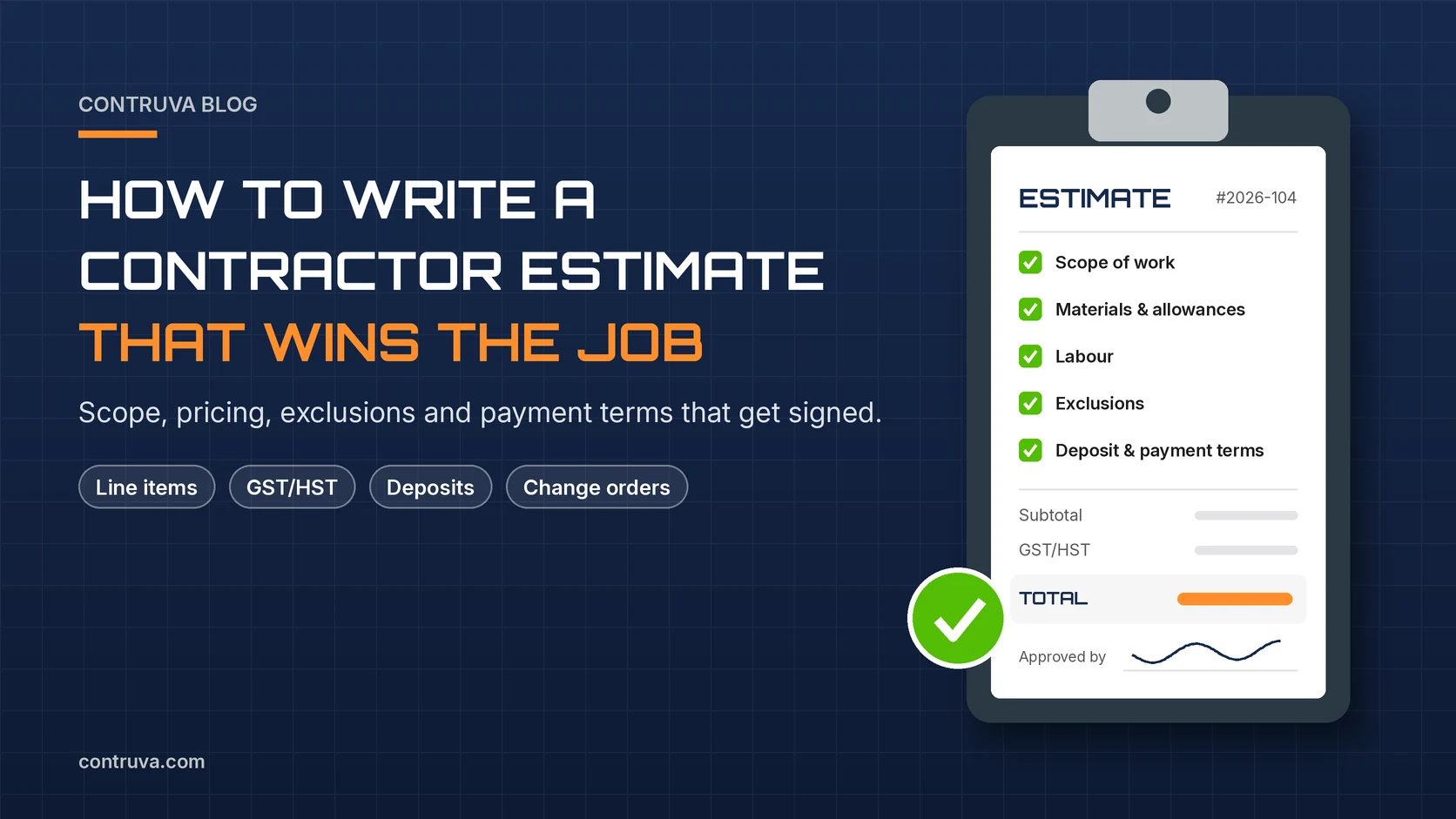
Your markup is part of your price, so it is taxable like the rest of it. Whether you show materials as one line or bury them in a lump sum, tax applies to the total the customer pays for the taxable work. Most contractors keep markup off the customer-facing estimate anyway; our guide on how to write a contractor estimate covers how to present pricing without inviting line-by-line haggling.
Allowances and customer selections
If the homeowner picks tile from an allowance and you buy and install it, that tile is part of your supply, and the final allowance amount you bill is taxable. Spell out on the estimate whether allowance figures are before or after tax so nobody is surprised at the final invoice.
Reimbursed expenses vs. true agency
Contractors sometimes ask whether they can bill permits, dumpsters, or rented equipment as a "reimbursement" without tax. The CRA draws the line based on who the expense was really for. Its info sheet on out-of-pocket expenses explains that when a supplier incurs an expense for itself while providing its services, the reimbursement is extra payment for those services and tax applies. Only when the supplier genuinely acts as the client's agent is the reimbursement outside the tax.
For a typical contractor buying materials and rentals to complete a job, that is not agency; it is part of your supply. If you think a cost really is incurred as the customer's agent, document the arrangement and get professional advice before leaving tax off.
What Your Invoice Has to Show
The CRA says you must tell customers whether GST/HST applies and whether it is included in the price or added separately. Your invoice should show the rate and either the tax as its own line or a clear statement that the total includes tax. If HST applies, show the total HST rate, not the federal and provincial parts separately.
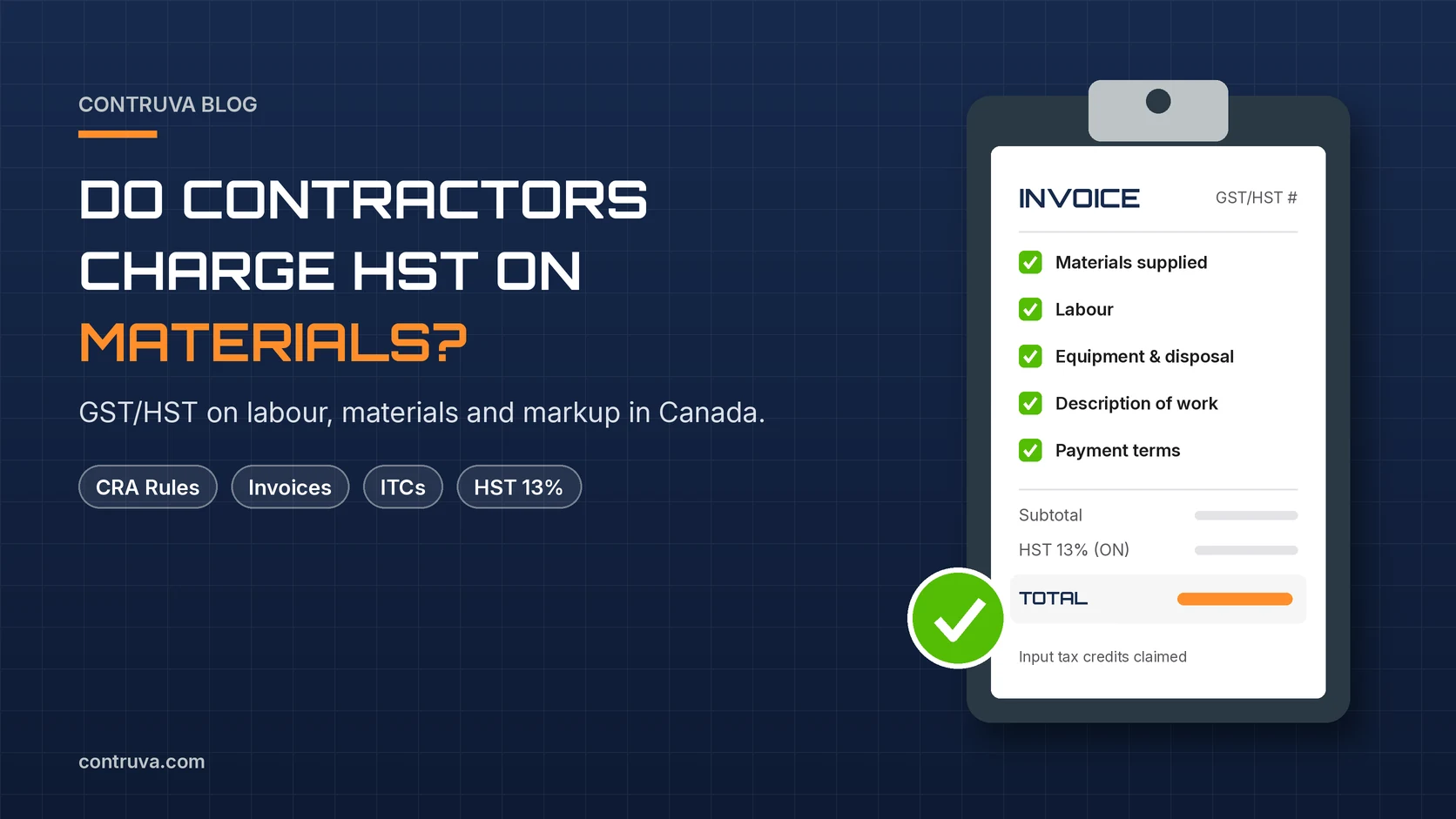
Commercial clients, general contractors, and property managers who are registered will also need your invoice to support their own ITC claims. The CRA's documentation requirements depend on the invoice total. For a sale of $500 or more, which covers nearly every contracting job, include:
- Your business or trading name and your GST/HST registration number.
- The invoice date.
- The total amount payable, and the GST/HST charged (or a statement that the price includes it at the applicable rate).
- Which items are taxable and which are exempt, if the invoice has both.
- The customer's name or trading name.
- A brief description of the work and materials supplied.
- Your payment terms.
An invoice missing your registration number can cost a commercial client their ITC, which is a quick way to get a payment held up. Build these fields into your template once and every invoice is compliant by default.
Keep Records That Back You Up
Hold on to every supplier receipt that supports an ITC. The CRA notes that you usually must keep records for six years from the end of the year they relate to. Snapping a photo of each receipt and tagging it to the job the day you buy the materials beats digging through a truck console at filing time. It also tells you what each job actually cost, which makes your next quote more accurate.
Where Contruva Fits
Contruva keeps customers, quotes, schedules, tasks, and job expenses together in one place built for Canadian trades. Material receipts get logged against the job they belong to, and the quote the customer approves carries the same pricing your team works from. Learn how it connects with the rest of your business in our guide to all-in-one contractor software, and see how faster responses win more of those jobs in speed to lead for contractors.
Frequently Asked Questions
Do contractors charge HST on materials?
If the contractor is registered for GST/HST, generally yes. Materials the contractor supplies as part of a taxable job are part of the price of that job, so tax applies to the full amount, including materials and markup. The contractor recovers the tax it paid to suppliers as input tax credits.
Is charging HST on materials double taxation?
No. The contractor claims an input tax credit for the HST paid when buying materials and remits only the difference between tax collected and tax paid. The customer pays tax once, on the final price.
Do I have to charge HST if I earn under $30,000?
Not usually. Under CRA rules you are a small supplier while your worldwide taxable revenues stay at or below $30,000 in a single calendar quarter and over the last four consecutive quarters. Small suppliers do not have to register or charge GST/HST, but they can register voluntarily.
What must a contractor's invoice show for GST/HST?
For invoices of $500 or more, the CRA expects your business name and GST/HST number, the invoice date, the total and the tax charged (or a statement that tax is included), the status of taxable and exempt items, the customer's name, a brief description of the supply, and payment terms.
Get your quotes, jobs, and expenses working together. Join the Contruva waitlist to bring customers, deals, quotes, schedules, tasks, and expenses into one connected workflow.
Recent Posts